In one sentence: People remember and use what they have practised under realistic conditions, far more than what they have only been told.
The transfer problem
Every educator and L&D leader knows the gap. A student can define contribution margin in an exam, then freeze when a pricing decision depends on it. A new manager can recite a feedback model, then avoid the difficult conversation on Monday.
Management educators have studied this gap for decades. Baldwin, Pierce, Joines and Farouk (2011) called it "the elusiveness of applied management knowledge": the finding that much of what is taught in business education is understood in the classroom but rarely applied at work. Knowing is not the same as doing.
The problem is not the content. It is the conditions. Most teaching asks learners to receive and recall. Work asks them to decide, under pressure, with incomplete information, and to live with the result.
Learning by doing, explained
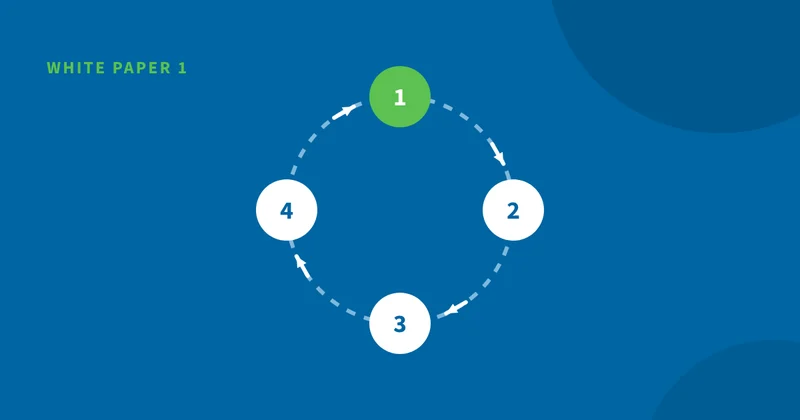
David Kolb's experiential learning cycle (1984) remains the most widely used model of how adults learn from experience. It has four stages:
- Concrete experience: you do something.
- Reflective observation: you look back at what happened.
- Abstract conceptualisation: you connect it to a principle or theory.
- Active experimentation: you try again, differently.
Lectures and readings mostly serve stage three. A well-run simulation moves learners through all four, round after round. They decide, see the consequences, make sense of them in a debrief, and decide again.
What the evidence shows
- Active learning outperforms lecturing. A meta-analysis of 225 studies in undergraduate STEM teaching found that students in traditional lectures were about 1.5 times more likely to fail than students in active-learning classes (Freeman et al., 2014).
- Simulation games improve learning outcomes. A meta-analysis of computer-based simulation games in workplace training found higher declarative knowledge, procedural knowledge, retention and self-efficacy among trainees who used them, compared with comparison groups (Sitzmann, 2011). The effect was strongest when learners could use the simulation actively and repeatedly.
- Assessment through decisions predicts performance. In a study of 398 experienced professionals, scores on Capsim's business and people management assessments correlated with supervisor ratings of job performance (r = .43), as reported by Capsim.
A word on the "learning pyramid"
You may have seen a pyramid claiming people remember 10% of what they read and 90% of what they do. It is widely shared and has no reliable research behind it. The real case for experiential learning does not need invented percentages. It rests on transfer: practice in realistic conditions makes knowledge usable.
What this means for you
- For academics: Use simulations where students must apply several modules at once, such as final-year strategy or the MBA capstone. Build in a structured debrief after every round, not only at the end.
- For L&D leaders: Put practice before promotion. Let high-potentials make general-management decisions in a simulation before they make them for real.
- For both: Measure what people do, not only what they can recall.
Next step
See how a Capsim simulation moves learners through the full cycle. Book a 30-minute demo →
Sources
- Baldwin, T. T., Pierce, J. R., Joines, R. C., & Farouk, S. (2011). The elusiveness of applied management knowledge: A critical challenge for management educators. Academy of Management Learning & Education, 10(4), 583–605.
- Freeman, S., Eddy, S. L., McDonough, M., Smith, M. K., Okoroafor, N., Jordt, H., & Wenderoth, M. P. (2014). Active learning increases student performance in science, engineering, and mathematics. Proceedings of the National Academy of Sciences, 111(23), 8410–8415.
- Kolb, D. A. (1984). Experiential Learning: Experience as the Source of Learning and Development. Prentice Hall.
- Sitzmann, T. (2011). A meta-analytic examination of the instructional effectiveness of computer-based simulation games. Personnel Psychology, 64(2), 489–528.
- capsim.com: 2M+ learners, 40 years, 50+ countries.
- capsim.com/corporate: 398 professionals, r = .43 correlation with supervisor ratings.